

The Masai Mara is one of the main reasons this world-famous reserve is considered the heart of Kenya’s safari experience. Masai Mara is located in southwestern Kenya, in Narok County, along the border with Tanzania’s Serengeti National Park. This position places it within the greater Mara-Serengeti ecosystem, one of Africa’s most important wildlife landscapes.
So, where is Masai Mara located? Masai Mara National Reserve lies southwest of Nairobi, near the Kenya-Tanzania border. It covers about 1,510 square kilometers and is managed by the Narok County Government, with the Mara Triangle section managed by Mara Conservancy on behalf of the county. For travelers, this means the Masai Mara is not just a park on a map. It is a strategic safari destination connected to the Serengeti, the Great Migration, the Mara River, Maasai culture, and some of Africa’s richest wildlife-viewing areas.

Masai Mara Location in Kenya
The Masai Mara is located in Kenya’s southern part of the Great Rift Valley, within Narok County. Narok County itself is situated in Kenya’s Rift Valley and borders Tanzania, making it one of the most important tourism counties in the country. Masai Mara is positioned southwest of Nairobi, which is why most safaris to the reserve start from Kenya’s capital. From Nairobi, travelers can reach the Mara by road through the Great Rift Valley and Narok, or by scheduled flight from Wilson Airport to one of the Masai Mara airstrips.
This location gives the reserve three major advantages:
- It is accessible from Nairobi.
- It connects directly with the Serengeti ecosystem.
- It supports year-round wildlife viewing and seasonal migration.
Is Masai Mara in Kenya or Tanzania?
Masai Mara is in Kenya. However, it borders Tanzania’s Serengeti National Park. The Masai Mara and Serengeti are separate protected areas in two different countries, but they are part of the same wider wildlife ecosystem. The Serengeti is in Tanzania. The Masai Mara is in Kenya. Wildlife moves between the two areas, especially during the Great Migration, when wildebeest, zebras, and gazelles move between the Serengeti and the Mara in search of fresh grazing. This cross-border connection is one of the reasons the Masai Mara location is so valuable for safari travelers.
Masai Mara Located in Which County?
Masai Mara is located in Narok County, Kenya. Narok County is one of Kenya’s most important safari regions and is widely known as the gateway to the Masai Mara National Reserve. The county is home to the reserve, nearby conservancies, Maasai communities, safari lodges, tented camps, and key access routes into the Mara. Masai Mara is located in Narok County, southwestern Kenya, along the Kenya-Tanzania border.
Masai Mara Location on the Map
On a map of Kenya, Masai Mara appears in the southwestern corner of the country, below Narok town and west of Nairobi. It is close to the Tanzania border and directly connected to the Serengeti ecosystem.
The reserve is bordered by different landscapes and areas:
- South: Tanzania and Serengeti National Park
- North: Maasai conservancies and community lands
- East: Sekenani, Talek, and other access areas
- West: Oloololo Escarpment and Mara Triangle
- Central areas: Mara River, Musiara Marsh, Talek River, open plains
The western section of the reserve, known as the Mara Triangle, is separated from the central reserve by the Mara River and is managed by the Mara Conservancy. Mara Conservancy states that it works within the Maasai Mara National Reserve and supports conservation, infrastructure, wildlife protection, and responsible tourism in the Mara Triangle.
How Far Is Masai Mara from Nairobi?
Masai Mara is approximately 225 to 275 kilometers from Nairobi, depending on the entry gate, camp, lodge, or conservancy you are visiting. The road journey usually takes around 5.5 to 7 hours, while scheduled flights from Nairobi’s Wilson Airport to Masai Mara airstrips usually take about 45 minutes to 1 hour.
The most common road route is:
Nairobi → Great Rift Valley Viewpoint → Narok Town → Masai Mara
The most common flight route is:
Wilson Airport, Nairobi → Masai Mara Airstrip → Camp or Lodge Transfer
Because the reserve has several entry gates and airstrips, the exact travel time depends on your final destination within the reserve.
Main Entry Gates Based on Masai Mara Location
Masai Mara has several entry gates, and the best gate depends on where your camp or lodge is located.
| Gate | Best For |
| Sekenani Gate | Eastern reserve access, many road safaris from Nairobi |
| Talek Gate | Camps near Talek River and central Mara areas |
| Oloolaimutia Gate | Eastern and southeastern access |
| Musiara Gate | Northern Mara and Musiara Marsh area |
| Oloololo Gate | Mara Triangle and western Mara |
| Sand River Gate | Southern Mara, near the Tanzania border |
For most travelers arriving by road from Nairobi, Sekenani Gate, Talek Gate, and Oloolaimutia Gate are commonly used. Travelers staying near the Mara Triangle or western side may use Oloololo Gate.
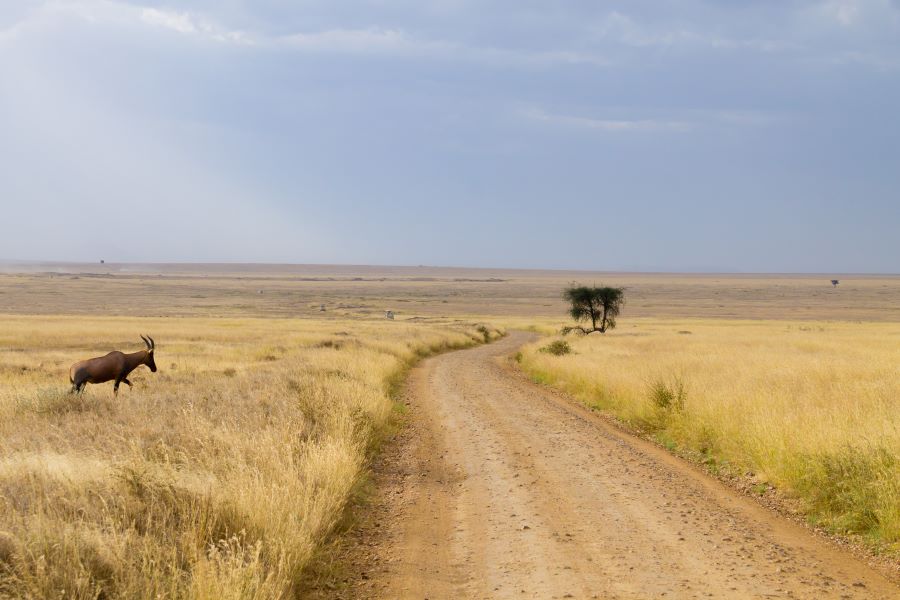
Why the Masai Mara Location Is Perfect for Safari
The Masai Mara is special because it lies within one of Africa’s richest wildlife corridors. Its open grasslands, river systems, escarpments, marshes, and connection to the Serengeti create an ideal environment for predators, grazers, birds, and migration herds.
Masai Mara is famous for:
- Lions
- Leopards
- Cheetahs
- Elephants
- Buffaloes
- Rhinos
- Wildebeest
- Zebras
- Giraffes
- Hippos
- Crocodiles
- More than 500 bird species
The reserve’s position along the Mara-Serengeti ecosystem also makes it one of the best places to witness the Great Migration. UNESCO’s tentative listing describes the Maasai Mara Game Reserve as covering 1,510 km² and being managed through Narok County structures, reinforcing its importance as a protected wildlife area in Kenya.
Masai Mara and the Serengeti: Why Location Matters
The Masai Mara is the northern continuation of the Serengeti ecosystem. There is no major natural wall separating the two landscapes. Wildlife moves across the Kenya–Tanzania border depending on rainfall, grass growth, and seasonal patterns. This is why the Masai Mara location is so powerful during the Great Migration. When the herds move north from the Serengeti into Kenya, the Mara becomes one of the best places to see dramatic river crossings, predator action, and large concentrations of wildlife.
For travelers choosing between Kenya and Tanzania, the Masai Mara is ideal if you want:
- Shorter access from Nairobi
- Big cat sightings
- Great Migration viewing from the Kenyan side
- Classic open savannah scenery
- A wide choice of lodges and camps
- Easy combination with Lake Nakuru, Amboseli, Naivasha, or Diani
Nearest Towns to Masai Mara
The nearest major town to Masai Mara is Narok Town. Most travelers driving from Nairobi stop in Narok for fuel, snacks, washrooms, or lunch before continuing to the reserve.
Other towns and access points around the Mara include:
- Sekenani
- Talek
- Oloolaimutia
- Aitong
- Kilgoris
- Keekorok area
- Lolgorien
- Lemek
These towns and access areas are important because they connect travelers to different gates, camps, conservancies, and airstrips.
Best Places to Stay Based on Masai Mara Location
Where you stay in Masai Mara should depend on your safari goals. The reserve is large, and each area gives a different experience.
| Area | Best For |
| Sekenani / Eastern Mara | First-time visitors, road safaris, and easier access from Nairobi |
| Talek / Central Mara | Good game drive access and many camp options |
| Mara River Area | Great Migration, river crossings, hippos, crocodiles |
| Musiara Marsh | Big cats, classic wildlife viewing, photographers |
| Mara Triangle | Scenic landscapes, migration routes, and less crowded areas |
| Private Conservancies | Privacy, night drives, walking safaris, luxury camps |
| Southern Mara | Quieter safari routes and access to the Serengeti ecosystem |
For first-time visitors, staying near Sekenani, Talek, central Mara, or Mara Triangle works well. For luxury travelers, honeymooners, and photographers, private conservancies and riverfront camps can offer a more exclusive experience.
How to Get to Masai Mara Based on Its Location
Because Masai Mara is located southwest of Nairobi, most travelers access it by either road or air.
By Road
The road journey from Nairobi to Masai Mara takes about 5.5 to 7 hours, depending on the gate and road conditions. The route passes through the Great Rift Valley and Narok before reaching the reserve.
Road travel is best for:
- Budget safaris
- Group joining safaris
- Private family safaris
- Travelers with 3 or more days
- Guests who want to see the Rift Valley
By Air
Flights depart from Wilson Airport in Nairobi and land at different Masai Mara airstrips. Flight time is usually around 45 minutes to 1 hour.
Flying is best for:
- Luxury safaris
- Honeymoons
- Short trips
- Families with young children
- Travelers staying in remote camps
- Guests who want to save time
Best Time to Visit Based on Masai Mara Location
Because of its location within the Mara-Serengeti ecosystem, the Masai Mara offers excellent safari experiences year-round.
- July to October –This is the Great Migration season and the most popular time to visit. Wildlife viewing is excellent, and many travelers come for the Mara River crossings.
- January to March – This is a good dry season period with strong wildlife viewing and fewer crowds than during peak migration months.
- April to June –This is the green season. The landscape is beautiful, prices may be better, and there are fewer visitors. Some roads can be muddy during rainy periods.
- November to December –Short rains can refresh the plains, and wildlife viewing remains rewarding.
Is Masai Mara Easy to Access?
Yes. Masai Mara is one of Kenya’s most accessible major safari destinations. Its location southwest of Nairobi makes it possible to visit on a 3-day, 4-day, or longer safari.
A short safari usually works like this:
Day 1: Nairobi to Masai Mara, evening game drive
Day 2: Full-day Masai Mara safari
Day 3: Morning breakfast and return to Nairobi
For a more comfortable trip, a 4-day Masai Mara safari is better because it gives you more time inside the reserve and reduces the feeling of rushing.