
6 DAYS 5 NIGHTS MOUNT KENYA TREK – NARO MORU TO SIRIMON
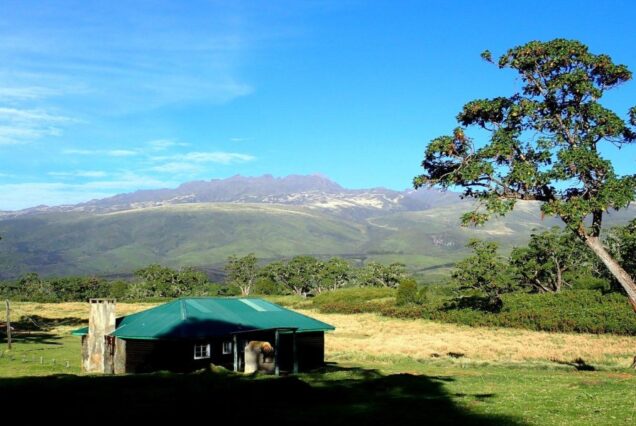
6-Day Mount Kenya Trek Overview
Step beyond the forest line, cross Mount Kenya’s unusual alpine moorlands and watch the sun rise from Point Lenana during this professionally supported 6-day Mount Kenya trek.
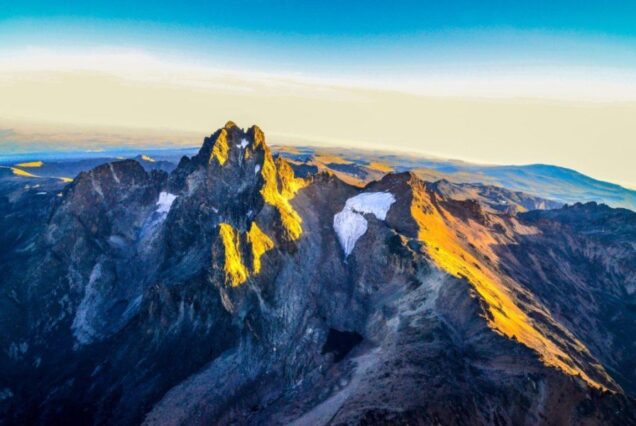
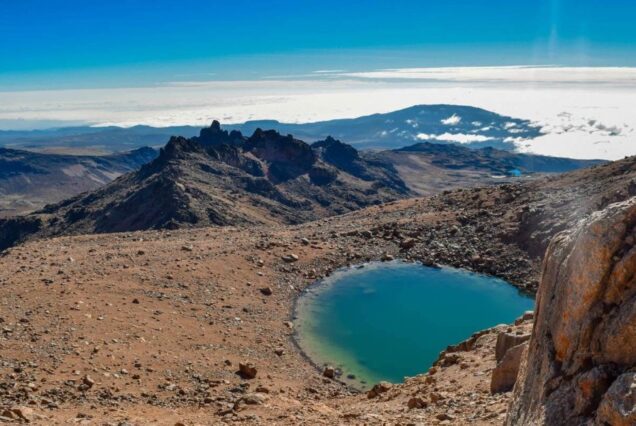
The journey ascends through the Naro Moru Route before crossing the mountain and descending through Sirimon. This combination allows trekkers to experience two distinctly different sides of Mount Kenya, including the forest and Vertical Bog of Naro Moru, the high Teleki Valley, the central peaks and the broad Mackinder Valley on the Sirimon side. Mount Kenya rises to 5,199 meters at Batian, making it Africa’s second-highest mountain. The mountain is an ancient extinct volcano and forms part of a UNESCO World Heritage property recognized for its dramatic summits, glacial landforms, forests and distinctive Afro-alpine ecosystems.
The objective of this hiking itinerary is Point Lenana at 4,985 meters, the highest summit accessible to regular trekkers. Batian at 5,199 meters and Nelion at 5,188 meters require technical rock-climbing skills, specialist equipment, and a separate expedition. Although the Naro Moru Route provides a relatively direct approach, it includes steep, wet and physically demanding terrain. Therefore, this six-day itinerary adds a dedicated acclimatization day and divides the summit and descent more carefully than the original program.
The summit attempt remains subject to weather, trail conditions, altitude response and the professional guide’s safety decision. Reaching Point Lenana can never be guaranteed.
Trek at a Glance
Duration: 6 Days / 5 Nights
Mountain: Mount Kenya
Trekking summit: Point Lenana, 4,985 meters
Highest mountain summit: Batian, 5,199 meters
Ascent route: Naro Moru Route
Descent route: Sirimon Route
Start point: Nairobi
End point: Nairobi
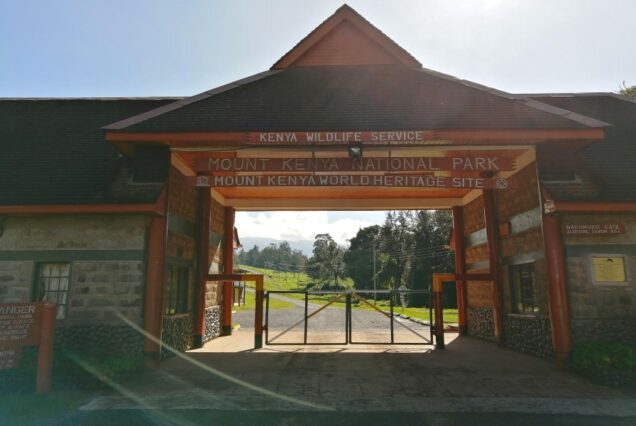
Mountain entry: Naro Moru Gate
Mountain exit: Sirimon Gate
Trek style: Private supported hut trek
Mountain nights: Four
Post-climb lodge nights: One
Accommodation: Shared mountain huts and selected lodge
Meals: Full board during the trek
Support crew: Guide, cook and porters
Difficulty: Challenging high-altitude trek
Technical climbing: Not required for Point Lenana under normal route conditions
Starting price: From USD 1,199 per person
Recommended group size: Four to eight trekkers
Minimum fitness: Good cardiovascular endurance and regular hiking preparation
Customization: Available before confirmation
Weather, hut availability, trail conditions, porter arrangements and individual altitude response may affect the final program.
Mount Kenya Trek Route and Map
Nairobi → Naro Moru → Naro Moru Gate → Met Station → Vertical Bog → Teleki Valley → Mackinder’s Camp → Point Lenana → Shipton’s Camp → Mackinder Valley → Old Moses Camp → Sirimon Gate → Nanyuki or Naro Moru → Nairobi
Why Choose This 6-Day Mount Kenya Trek?
This 6-day Mount Kenya trek provides more acclimatization time than the compressed three- and four-day Naro Moru itineraries commonly sold online.
The dedicated Day 3 acclimatization program allows trekkers to walk higher before returning to Mackinder’s Camp. This “climb high, sleep lower” approach gives the guide more time to assess how each participant responds to altitude before the summit attempt. Moreover, the traverse does not repeat the same route. You ascend through the Naro Moru landscape, cross the central mountain and descend through Sirimon. The private support team also manages navigation, meals, shared equipment and main luggage. Consequently, trekkers carry only their daypack with water, clothing, personal medication, snacks and essential equipment.
Finally, the package includes a post-climb lodge night. After reaching Sirimon Gate, you can shower, rest and celebrate before returning to Nairobi the following day.
Naro Moru Route Experience
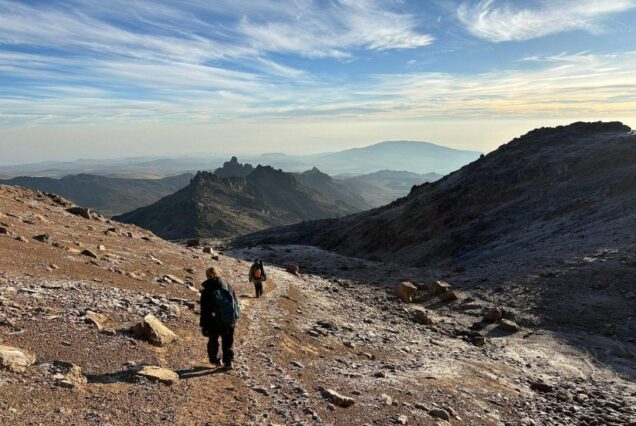
The Naro Moru Route begins in montane forest before entering bamboo, heath and moorland zones. Higher up, trekkers cross the Vertical Bog, which can become wet, muddy and slippery.
Because Naro Moru gains altitude relatively quickly, it requires careful pacing. The route works best for trekkers who have prepared physically and follow the guide’s instructions from the first day. The upper route continues through the Teleki Valley toward Mackinder’s Camp, with increasingly dramatic views of Mount Kenya’s central peaks. During dry conditions, the route may feel firm and direct. However, rain can make the bog and higher trails much more demanding.
Point Lenana Summit Experience
The Point Lenana summit attempt normally begins before dawn. Trekkers use headlamps while moving slowly through cold, dark, and high-altitude terrain toward the 4,985-meter summit.
Weather permitting, arrival is timed around sunrise. From the summit area, trekkers may see Batian, Nelion, surrounding valleys and the Kenyan highlands. Distant Mount Kilimanjaro may appear on exceptionally clear mornings, but visibility cannot be guaranteed. Point Lenana is a trekking summit rather than Mount Kenya’s true highest point. Batian and Nelion require technical climbing and are not included in this package. After the summit, the group descends to Shipton’s Camp on the Sirimon side. The guide may shorten, delay or cancel the summit attempt when weather, illness, altitude symptoms or trail conditions create unacceptable risk.
Sirimon Route Descent
Sirimon approaches Mount Kenya from the north-west and passes through the broad Mackinder Valley, open moorland and montane forest.
After spending the summit night at Shipton’s Camp, trekkers descend toward Old Moses Camp and Sirimon Gate. The lower trail provides a gradual transition from alpine terrain to heath and forest. The Day 5 descent remains long and requires strong knees, trekking poles and suitable footwear. However, it takes place at progressively lower altitude and ends with a transfer to a comfortable lodge.
Who Is This Mount Kenya Trek Best For?
This package suits:
- Fit first-time high-altitude trekkers
- Experienced hikers
- Adventure travellers
- Couples and friends
- Private groups
- Corporate or charity hiking teams
- Photographers
- Travelers preparing for Kilimanjaro
- Trekkers who want a route traverse instead of an out-and-back climb
Participants should be comfortable walking for several consecutive days while carrying a daypack.
The trek may not suit travelers with very low fitness, recent injuries, uncontrolled medical conditions, or no hiking preparation. Anyone concerned about altitude or an existing health condition should seek qualified medical advice before booking.
Trek Difficulty and Preparation
The route is classified as challenging because of:
- High altitude
- Consecutive hiking days
- Cold summit conditions
- Mud and bog on the Naro Moru Route
- Long descents
- Basic mountain accommodation
- Early summit departure
- Rapidly changing weather
Point Lenana does not normally require ropes or technical climbing. Nevertheless, trekkers may encounter steep scree, rock, ice, snow or frozen ground depending on current mountain conditions.
A useful preparation program should include:
- Regular hill walking
- Stair or incline training
- Cardiovascular exercise
- Strength work for legs and core
- Practice carrying a daypack
- Long walks on consecutive days
- Breaking in hiking boots before departure
Begin structured preparation several weeks before the trek rather than relying only on general fitness.
Mountain Accommodation
The package uses basic shared mountain huts, subject to availability and current operating conditions.
Met Station
Met Station sits on the Naro Moru Route at approximately 3,050 meters. Accommodation normally consists of shared bunk space with limited mountain facilities.
Mackinder’s Camp
Mackinder’s Camp lies in the Teleki Valley at approximately 4,200 meters. The package uses the camp for two nights, including the acclimatization day.
Shipton’s Camp
Shipton’s Camp lies on the Sirimon side at approximately 4,200 meters. It provides the summit-night accommodation after the descent from Point Lenana.
Post-Climb Lodge
After reaching Sirimon Gate on Day 5, the group transfers to selected accommodation in Nanyuki or Naro Moru.
Possible options may include:
- Naro Moru River Lodge
- Bantu Mountain Lodge
- Another comparable lodge near Nanyuki or Naro Moru
Naro Moru River Lodge operates as a mountain base near Mount Kenya, while Bantu Mountain Lodge is located on the lower slopes between Naro Moru and Nanyuki.
Important Mountain-Hut Expectations
Mountain huts are not hotels. Trekkers should expect:
- Shared sleeping areas
- Bunk beds or sleeping platforms
- Basic toilets
- Limited washing facilities
- Cold conditions
- Limited or no electricity
- No guaranteed charging points
- No private bathrooms
- Possible noise from other trekking groups
A suitable sleeping bag remains essential even when huts are used.
When a hut becomes unavailable or unsuitable, Tunza Tours may arrange camping at the same general location. Any major change will be explained before departure whenever operationally possible.
Tunza Tours confirms the huts and post-climb lodge after receiving the required payment and supplier confirmation.
Accommodation Comparison
| Accommodation option | Typical arrangement | Best suited to |
|---|---|---|
| Shared mountain hut | Basic bunk accommodation with communal facilities | Standard trekking package |
| Private camping upgrade | Mountain tent, sleeping mat and organized camp facilities | Groups seeking greater privacy |
| Premium camping support | Larger tent, enhanced mattress, private toilet tent and mess tent | Couples and higher-comfort trekkers |
| Post-climb lodge | Private room, shower, bed and restaurant | Recovery after the mountain descent |
The headline price uses shared mountain huts and a standard post-climb lodge room.
Mountain Crew and Porter Support
The crew normally consists of:
- Lead mountain guide
- Assistant guide when group size requires one
- Mountain cook
- Porters
- Transfer driver
The exact crew size depends on the number of trekkers, shared equipment, food, route and permitted porter loads.
Each standard personal porter allowance should be limited to 12 kilograms per trekker. Guests carrying more may require an additional porter at extra cost. Pack personal equipment in a soft duffel bag. Porters do not normally carry hard suitcases or oversized travel luggage on the mountain. Treat all crew members respectfully and follow the guide’s safety instructions throughout the trek.
6-Day Mount Kenya Trek Price
Starting From USD 1,199 Per Person Sharing
The advertised rate applies to four to eight non-resident adults traveling together on selected dates.
It is based on:
- Shared mountain huts
- Two guests sharing the post-climb lodge room
- Standard porter allowance
- Private Nairobi transfers
- Professional mountain crew
- Full-board trek meals
- Treated water
- Applicable park fees
- Point Lenana summit attempt
The final price depends on:
- Group size
- Nationality or residency category
- Travel dates
- Park-entry duration
- Hut or camping arrangement
- Porter requirements
- Personal luggage weight
- Post-climb lodge
- Single-room requests
- Equipment rental
- Dietary requirements
- Airport or hotel transfer arrangements
- Emergency and evacuation cover
- Festive supplements
USD 1,199 is therefore an indicative starting rate rather than a fixed price for every trekker.
Recommended Private Group Pricing
| Number of trekkers | Recommended price |
|---|---|
| 1 trekker | From USD 1,795 |
| 2 trekkers | From USD 1,495 per person |
| 3 trekkers | From USD 1,295 per person |
| 4–6 trekkers | From USD 1,199 per person |
| 7–8 trekkers | From USD 1,149 per person |
| 9 or more | Custom quotation |
Larger groups require additional guides, porters, cooking equipment and transport planning.
Recommended Package Levels
Standard Hut Trek – From USD 1,199
Includes shared mountain huts, standard porter support, full-board meals and a selected post-climb lodge.
Private Camping Trek – From USD 1,399
Includes tents and organized campsite support instead of shared hut accommodation.
Premium Supported Trek – From USD 1,599
May include enhanced mattresses, larger tents, private toilet tent, mess tent, additional guide support, upgraded meals and stronger post-climb accommodation.
The final package level depends on crew arrangements, equipment availability and group size.
Recommended Travel-Period Pricing
Lower-Demand Dates – From USD 1,199
Available on selected dates outside the main dry-season demand periods.
Popular Dry-Season Dates – From USD 1,249
May apply during January, February, July, August and September.
Festive and Holiday Dates – From USD 1,349
May apply around Christmas, New Year, Easter and other high-demand periods.
Weather can change rapidly at any time of year, including during normally drier periods.
Mount Kenya Park Fees and Additional Charges
Kenya Wildlife Service currently lists Mount Kenya conservation fees at:
- Non-resident adult: USD 70
- Non-resident child: USD 35
- African citizen adult: USD 30
- African citizen child: USD 15
- Separate Kenyan resident and East African citizen rates
Tunza Tours will calculate park fees using the guest category and number of applicable park days in the confirmed itinerary.
Possible additional charges include:
- Extra porter
- Excess luggage
- Equipment rental
- Single-room lodge supplement
- Private tent
- Premium camping support
- Airport transfer
- Nairobi accommodation
- Emergency evacuation
- Medical treatment
- Additional accommodation caused by delays
- Route changes requested by the guest
- Festive supplements
- Changes to official park or hut fees
Full-Board Mountain Meals
Meals normally begin with lunch on Day 1 and end with breakfast on Day 6.
Typical mountain meals may include:
- Porridge, eggs, toast and fruit
- Soups
- Rice, pasta or potatoes
- Vegetables
- Meat or vegetarian dishes
- Sandwiches
- Hot drinks
- Trail snacks
- Summit-night refreshments
The mountain cook prepares meals according to available supplies and the limitations of high-altitude cooking.
Inform Tunza Tours in advance about:
- Vegetarian diets
- Vegan diets
- Food allergies
- Religious dietary requirements
- Gluten sensitivity
- Other medically necessary food restrictions
Highly specialized foods or personal energy products should be carried by the trekker.
Drinking Water
The mountain crew provides boiled, filtered or otherwise treated water according to the confirmed operational plan.
Trekkers should carry reusable bottles or a hydration bladder with a total capacity of at least two to three liters. Disposable plastic water bottles should not form the primary mountain-water system. Current Mount Kenya visitor guidance also encourages reusable water containers and responsible waste management. Carry personal electrolyte tablets or rehydration products when required.
Altitude and Trekking Safety
High altitude affects people differently, and fitness does not guarantee protection from altitude illness.
Trekkers must report symptoms such as:
- Persistent headache
- Nausea
- Dizziness
- Unusual weakness
- Loss of coordination
- Confusion
- Breathing difficulty at rest
The guide may instruct a trekker to rest, stop ascending, or descend. The guide’s safety decision takes priority over the summit objective.
The package includes emergency coordination, not free evacuation or medical treatment. Every participant should obtain travel insurance that specifically covers trekking to at least 5,000 meters, medical treatment and emergency evacuation.
Helicopter evacuation depends on weather, aircraft availability, location, authorization, and insurance or payment arrangements. It should never be presented as guaranteed.
Best Time to Trek Mount Kenya
Mount Kenya can be visited throughout the year, but January to February and July to September generally offer drier trekking windows, improved visibility and easier trail conditions. Even during these periods, high-altitude weather can change quickly.
March to May and parts of October to December can bring heavier rain. The Naro Moru Vertical Bog may become particularly wet and difficult during rainy periods.
Local Guide Tips
- Walk slowly from the first day rather than waiting until you feel tired.
- Keep rain protection accessible because weather can change without warning.
- Use trekking poles during both the Vertical Bog and the long Sirimon descent.
- Carry summit clothing in your daypack instead of placing it in the porter bag.
- Protect electronics and dry clothing inside waterproof liners.
- Finally, tell the guide about altitude symptoms immediately. Hiding symptoms can turn a manageable problem into an emergency.
Mount Kenya Packing Checklist
Essential Footwear
- Waterproof hiking boots
- Moisture-wicking hiking socks
- Spare warm socks
- Lightweight camp shoes
- Gaiters
Clothing
- Thermal base layers
- Fleece or insulated mid-layer
- Waterproof jacket
- Waterproof trousers
- Warm summit jacket
- Hiking trousers
- Warm hat
- Sun hat
- Buff or neck gaiter
- Insulated gloves
- Thin liner gloves
Sleeping and Bags
- Four-season sleeping bag
- Sleeping-bag liner
- Soft duffel bag
- Waterproof duffel liner
- Daypack with rain cover
- Dry bags
Trekking Equipment
- Headlamp
- Spare batteries
- Trekking poles
- Reusable water bottles or hydration bladder
- Sunglasses
- Sunscreen
- Lip balm
- Personal snacks
- Power bank
- Camera
Personal Items
- Passport or identification
- Residency documents where applicable
- Personal medication
- Basic personal first-aid items
- Toiletries
- Wet wipes
- Hand sanitizer
- Small quick-dry towel
- Travel insurance documents
- Cash for gratuities and personal purchases
Equipment Rental
Possible rental equipment may include:
- Four-season sleeping bag
- Waterproof jacket
- Waterproof trousers
- Insulated jacket
- Hiking boots
- Gaiters
- Trekking poles
- Headlamp
- Duffel bag
- Daypack
- Warm gloves
Rental items must be reserved before the trek and remain subject to size and availability.
Guests should test rental boots and critical equipment before leaving the mountain base.
Booking Your 6-Day Mount Kenya Trek
To book this 6-day Mount Kenya trek, provide:
- Preferred travel dates
- Number of trekkers
- Nationality or residency category
- Hiking experience
- Recent high-altitude experience
- Dietary requirements
- Equipment-rental needs
- Personal porter-bag weight
- Nairobi pickup location
- Emergency contact
- Relevant medical information
- Travel-insurance details
Tunza Tours will then check the guide, cook, porter team, huts, park entry, transport and lodge.
Afterward, the team will issue a detailed quotation showing the route, crew, accommodation, equipment, price and payment terms.
A 30% deposit normally secures the trek. However, last-minute bookings, premium camping arrangements and festive departures may require a higher deposit or full payment.
Changes and Cancellation
Changes to the dates, route, group size, accommodation, equipment or porter requirements may affect the final price.
Cancellation charges depend on the notice provided and the costs already committed to:
- Park authorities
- Mountain huts
- Lodge accommodation
- Guides
- Porters
- Cook
- Transport providers
- Equipment suppliers
Weather-related itinerary changes do not automatically qualify for a refund when the crew, accommodation, transport and park services have already been supplied.
The professional guide may alter the route, summit time or overnight location for safety reasons.
Review the full cancellation and mountain-risk conditions before paying the deposit.
Frequently Asked Questions
Does This Trek Reach Mount Kenya’s Highest Point?
No. The trek aims for Point Lenana at 4,985 meters. Batian at 5,199 meters is Mount Kenya’s highest point and requires technical rock climbing.
Is Technical Climbing Required?
Point Lenana normally requires trekking rather than technical rock climbing. However, snow, ice, scree and severe weather can make the route more difficult.
Is USD 1,199 a Fixed Price?
No. It is the starting price for four to eight non-resident adults using shared mountain huts and standard post-climb accommodation.
Why Was the Original USD 899 Price Increased?
Current competitor rates, park fees, porter costs, crew support, meals, huts, transport and the lodge night make USD 899 difficult to sustain for a fully supported non-resident trek.
Is This a Private Trek?
Yes. The standard package uses a dedicated guide, cook and porter team for the confirmed booking group.
How Many Nights Are Spent on the Mountain?
The corrected itinerary includes four mountain nights and one post-climb lodge night.
Where Do We Sleep?
The standard program uses Met Station, Mackinder’s Camp for two nights, Shipton’s Camp, and a selected post-climb lodge near Nanyuki or Naro Moru.
Do the Mountain Huts Have Private Rooms?
No. Mountain huts generally use basic shared sleeping areas and communal facilities.
Is a Sleeping Bag Included?
No. Trekkers should bring or rent a suitable four-season sleeping bag unless the confirmed quotation states otherwise.
Why Do We Sleep at Shipton’s Camp After the Summit?
Shipton’s Camp separates the high-altitude summit day from the long lower Sirimon descent. This creates a more manageable itinerary than descending directly to Old Moses on summit day.
Is There an Acclimatization Day?
Yes. Day 3 includes a guided acclimatization hike from Mackinder’s Camp followed by another night at the same camp.
Is Reaching Point Lenana Guaranteed?
No. The summit depends on weather, trail conditions, fitness, altitude response, and the guide’s safety decision.
Are Porters Included?
Yes. Standard porter support is included within the confirmed personal luggage allowance.
How Much Can My Porter Carry?
The recommended personal allowance is up to 12 kilograms per trekker. Additional weight may require another porter and an extra charge.
Do I Carry My Own Daypack?
Yes. Carry water, waterproof clothing, warm layers, medication, snacks, camera equipment, and personal essentials in your daypack.
Is Drinking Water Included?
Yes. The crew provides treated water according to the confirmed trek plan. Trekkers must carry reusable water bottles or a hydration bladder.
Is Travel Insurance Included?
No. Each participant should obtain insurance covering high-altitude trekking, medical treatment and emergency evacuation.
Is Emergency Evacuation Included?
Tunza Tours provides coordination support. Evacuation, aircraft, rescue and medical costs remain payable by the traveler or insurer unless explicitly included.
Can Beginners Join?
Fit beginners with suitable preparation may join. However, the route remains physically demanding and reaches high altitude.
Is the Trek Suitable for Children?
Bookings involving minors require individual review. Young children and babies should not be accepted on this high-altitude itinerary.
Can We Use Tents Instead of Huts?
Yes. Private camping can be arranged at an additional cost, subject to park rules and equipment availability.
What Happens After Reaching Sirimon Gate?
The group transfers to a selected lodge near Nanyuki or Naro Moru for a shower, dinner, rest, and overnight stay.
Can the Trek End in Nanyuki?
Yes. Guests may end the package in Nanyuki instead of returning to Nairobi on Day 6. The final transport price will be adjusted.
Why Book With Tunza Tours?
Tunza Tours coordinates your route, park fees, professional mountain crew, accommodation, meals, porter support and transport within one organized booking.
Before payment, you receive clear information about:
- The exact route
- Mountain huts
- Post-climb lodge
- Personal porter allowance
- Meals and water
- Rental equipment
- Park fees
- Emergency procedures
- Exclusions
- Payment terms
Professional support remains available before, during and after the trek.
Request Your Mount Kenya Trek Quote
Cross Mount Kenya from the Naro Moru forest to the Sirimon moorlands and experience sunrise from Point Lenana during a professionally supported six-day adventure.
Send your travel dates, group size, residency category, hiking experience, and equipment requirements to receive a personalized quotation.
Included/Excluded
- Six-day guided Mount Kenya trek
- Services of a professional English-speaking driver-guide
- Accommodation throughout the safari
- Meals as specified in the itinerary
- Park entry fees unless stated otherwise in your quotation
- Professional assistance before, during and after the trip.
- Basic guide first-aid kit
- International and domestic flights
- Visa fees where applicable
- Travel insurance
- Personal expenses such as laundry, telephone calls, and souvenirs
- Tips and gratuities
- Personal hiking equipment
- Medical treatment
- Any item not listed as included
- Airport transfers unless specified
Tour Plan
Your Mount Kenya trek begins with an early pickup from your Nairobi hotel, residence or agreed meeting point. Travel north through central Kenya toward Naro Moru, where you meet the mountain crew and complete final equipment checks.
Continue to Naro Moru Gate for registration and the guide’s safety briefing. Afterward, begin trekking through montane forest toward Met Station at approximately 3,050 metres.
The first day provides a steady introduction to the mountain while allowing the group to settle into a comfortable walking pace. Depending on weather and trail conditions, the hike normally takes approximately three to four hours.
Arrive at Met Station in the afternoon, organise your sleeping space and enjoy a hot meal prepared by the mountain cook.
Approximate trekking distance: 8–10 kilometres
Approximate trekking time: 3–4 hours
Altitude gain: Approximately 600 metres
Meals: Lunch and dinner
Accommodation: Met Station mountain hut
After breakfast, leave Met Station and continue through heath and moorland toward the higher Naro Moru Route.
Cross the well-known Vertical Bog, where trail conditions may be wet, muddy or slippery. Trekking poles and gaiters are particularly useful in this section.
Continue toward the Teleki Valley as the vegetation changes to giant lobelias, groundsels and open Afro-alpine terrain. Views of Mount Kenya’s central peaks become increasingly dramatic as you approach Mackinder’s Camp at approximately 4,200 metres.
Arrive during the afternoon, rest and enjoy dinner while the guide checks how the group is responding to the increased altitude.
Approximate trekking distance: 12–14 kilometres
Approximate trekking time: 6–8 hours
Altitude gain: Approximately 1,150 metres
Meals: Breakfast, lunch and dinner
Accommodation: Mackinder’s Camp mountain hut
Spend a second night at Mackinder’s Camp to improve the itinerary’s acclimatization profile.
After breakfast, take a guided hike toward higher ground in the Teleki Valley or the Austrian Hut direction. The precise route depends on weather, trail conditions and how each trekker feels.
The aim is to gain altitude gradually before returning to Mackinder’s Camp for lunch, rest and summit preparation.
During the afternoon, organise summit clothing, headlamps, water and snacks. The guide will explain the summit timetable, expected conditions and procedures for anyone experiencing altitude symptoms.
Approximate trekking time: 3–5 hours
Maximum altitude: Determined by guide and conditions
Meals: Breakfast, lunch and dinner
Accommodation: Mackinder’s Camp mountain hut
Wake before dawn, take a light breakfast and begin the Point Lenana summit attempt under headlamp light.
Move slowly through the high alpine terrain while the guide monitors the group’s condition. Weather, snow, ice and individual altitude response will determine the final pace.
Reach Point Lenana at 4,985 metres around sunrise when conditions allow. Enjoy views of Mount Kenya’s central peaks and surrounding highlands before beginning the descent.
Continue down the northern side toward Shipton’s Camp at approximately 4,200 metres. After arriving, rest, eat and recover from the summit effort.
Separating Shipton’s Camp from the lower Sirimon descent makes the summit day more manageable than continuing directly to Old Moses Camp.
Approximate trekking time: 7–10 hours
Highest altitude: 4,985 metres
Meals: Breakfast, lunch and dinner
Accommodation: Shipton’s Camp mountain hut
After breakfast, begin the long descent through Mackinder Valley toward Old Moses Camp.
The trail passes through open moorland before entering heath and montane forest. Stop for lunch or a rest near Old Moses according to the group’s pace and the confirmed programme.
Continue to Sirimon Gate, where the transfer vehicle meets the group. After completing park check-out, drive to the selected lodge near Nanyuki or Naro Moru.
Enjoy a hot shower, dinner and a comfortable bed while celebrating the completion of the mountain traverse.
Approximate trekking distance: 22–24 kilometres
Approximate trekking time: 7–9 hours
Altitude loss: Approximately 1,550 metres
Meals: Breakfast, lunch and dinner
Accommodation: Selected lodge near Nanyuki or Naro Moru
Enjoy breakfast at the lodge before checking out.
Travel back to Nairobi through central Kenya, with a possible Equator stop near Nanyuki when time and traffic allow.
Arrival in Nairobi is expected during the afternoon. The package ends after drop-off at your hotel, residence or agreed location.
There is no hiking activity on Day 6.
Meals: Breakfast
Tour Map